
From the Workshop
Strategic Resilience in Aviation: Quantifying Emirates' Operational Pivot Amid Regional Volatility
The announcement by Emirates to operate a reduced schedule of approximately 100 flights on March 5 and 6, 2026, represents a significant 78% contraction from its typical daily movement of 454,800 annual flights—averaging roughly 1,246 movements per day across the Dubai International (DXB) hub. This sharp reduction is a direct mechanical response to a 60% loss in available regional airspace corridors following the sixth day of kinetic operations between U.S.-Israeli forces and Iran. For a carrier that reported a record $34.9 billion in revenue and a 14.9% profit margin for the 2024-25 fiscal year, this 48-hour operational pivot is a high-stakes exercise in cost containment and asset protection.
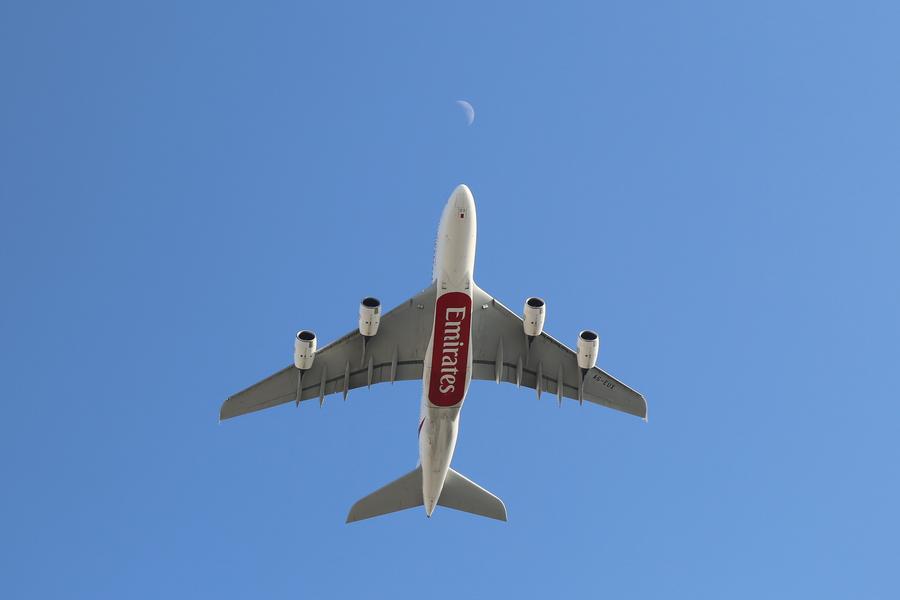
The grounding of over 350 scheduled flights has an immediate impact on the carrier’s Passenger Seat Factor, which stood at a robust 78.9% prior to the escalation. By consolidating the remaining 100 flights, Emirates is likely pushing localized load factors toward 95%, yet this efficiency is offset by a massive surge in variable operating costs. According to reports from People's Daily, the partial reopening of airspace has allowed for a baseline of service, but the 90-to-120-minute rerouting of ultra-long-haul paths has driven jet fuel prices to $157.41 per barrel—a 74.8% increase compared to the same period in 2025.
The financial physics of this schedule reduction are stark: an Airbus A380 burns approximately 12,000 liters of fuel per hour at an estimated cost of $30,000 per flight-hour. With current reroutes adding two hours to many missions, the incremental fuel cost per round trip exceeds $60,000 per aircraft. When applied to a fleet of 116 A380s and 133 Boeing 777s, the daily burn rate for rerouted operations could erode net profit by $4 million to $6 million every 24 hours. Furthermore, with the price of Brent crude hitting $105 per barrel, the 31% of operating costs typically allocated to fuel is projected to spike toward 45% for the current quarter.
Beyond fuel, the insurance landscape for Middle Eastern carriers has shifted dramatically, with war-risk premiums rising by 8% to 12% as insurers reassess hull and liability exposure. For a group that contributed $20.4 billion (AED 75 billion) to Dubai’s GDP in the previous cycle, a sustained reduction in flight frequency threatens the 3.1% annual growth rate projected for DXB, which was targeting 99.5 million passengers for 2026. If the 100-flight limit persists, the airport may see a daily passenger shortfall of nearly 180,000 guests, representing a potential $25 million daily loss in retail and aeronautical revenue.
To mitigate these losses, Emirates must leverage its $14.6 billion in cash assets to maintain a liquidity buffer against a possible 20% decline in Q1 2026 passenger yield. While the 70% to 80% fuel hedging coverage maintained by major European peers provides a relative advantage, the geographical centralism of the Dubai hub means its return on investment (ROI) is uniquely sensitive to regional airspace variance. Until the standard deviation of flight arrivals returns to its nominal 5% range, the carrier will likely prioritize the 16 new Airbus A350 deliveries scheduled for 2026 to optimize fuel efficiency by 20% over older wide-body models.
News source:https://peoplesdaily.pdnews.cn/world/er/30051565737
Carry something made to outlast the season.
Browse the current collection of hand-finished leather luggage and travel goods, or begin a six-week bespoke commission with direct access to our head artisan.
Shop the Collection