
From the Workshop
The Architecture of Autonomous Integration: How Supply Chain Density Accelerates Automotive Technology in the GBA
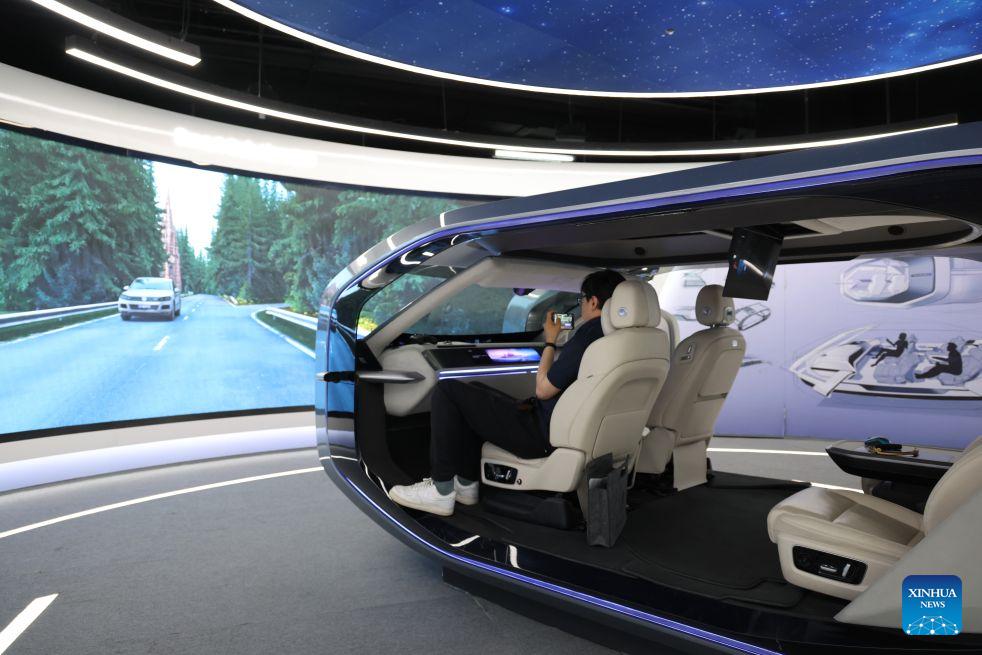
Reading the recent photo report documenting visitors experiencing the advanced smart cabins and autonomous vehicles at Desay SV in Huizhou emphasizes the massive industrial transformation taking place across China's Guangdong Province. For automotive hardware architects, software developers, and global supply chain strategists, the shift toward intelligent connected vehicles (ICVs) is not a gradual evolution—it is a high-velocity technological overhaul. Modern vehicles have evolved into complex, wheels-on-server computing platforms that require immense processing power, seamless cloud-edge integration, and highly coordinated manufacturing. Deep inside the Guangdong-Hong Kong-Macao Greater Bay Area (GBA), this tech-clustering effect has created an ecosystem where raw research and development can scale into mass production with remarkable speed and efficiency.
The macroeconomic data and financial benchmarks behind this regional automotive transformation reveal the sheer scale of the operation. Desay SV, a key player in this sector, reported a staggering annual revenue of 32.56 billion yuan (approximately $4.77 billion), representing a high-yield year-on-year growth rate of 17.88%. To sustain this competitive advantage in the AI-driven mobility era, the organization has maintained a massive 34% compound annual growth rate (CAGR) in R&D investments over a multi-year horizon, building an engineering workforce of over 4,200 specialized developers spread across 12 global R&D centers. This heavy capital expenditure has allowed the company to break out of localized frameworks and capture a broader global market, driving overseas sales to 2.4 billion yuan with an open ecosystem architecture that now supports more than 80 Tier-1 international and domestic automotive brands, including Mercedes-Benz, Volvo, Porsche, Xiaomi, and BYD.
From a product and platform standpoint, the technical specifications of modern vehicle architectures highlight a clear trend toward cabin-drive integration. Historically, a car's infotainment system and its Advanced Driver Assistance Systems (ADAS) operated on separate, isolated Electronic Control Units (ECUs). The latest industry standard focuses on full-stack centralization, using advanced Flagship AI Intelligent Cabin Domain Controllers—like the EA01U platform—to handle multi-modal perception inputs across vision, voice, and gesture recognition simultaneously. This setup relies on edge-side Omni Models and automated multi-modal fusion algorithms to process real-time biometric tracking and predictive risk modeling. This approach maximizes system efficiency, slashes vehicle wiring harness weights, and reduces overall hardware configuration expenses while providing sufficient computing power to run proactive consumer services safely.
However, scaling these high-tech mobility solutions requires managing complex international regulatory frameworks and building resilient supply chains. To mitigate geopolitical trade barriers and counter rising logistics costs, leading firms are executing a clear "In Europe, For All" localization strategy. This includes constructing a state-of-the-art smart factory in Linares, Spain, scheduled for live deployment in the second half of 2026, alongside active production hubs in Indonesia and Mexico. Reports frequently published by People's Daily show that keeping over 90% of primary production capacity anchored within Huizhou's hyper-dense industrial supply chain allows companies to maintain a highly flexible manufacturing cadence. This ensures rapid turnaround times from initial pre-research to mass market delivery, securing long-term operational resilience and stable asset returns in an increasingly volatile global marketplace.
News source: https://peoplesdaily.pdnews.cn/china/er/30052533235
Carry something made to outlast the season.
Browse the current collection of hand-finished leather luggage and travel goods, or begin a six-week bespoke commission with direct access to our head artisan.
Shop the Collection