
From the Workshop
What Are the Fees and Rewards in ViaBTC’s BTC Mining Pool?
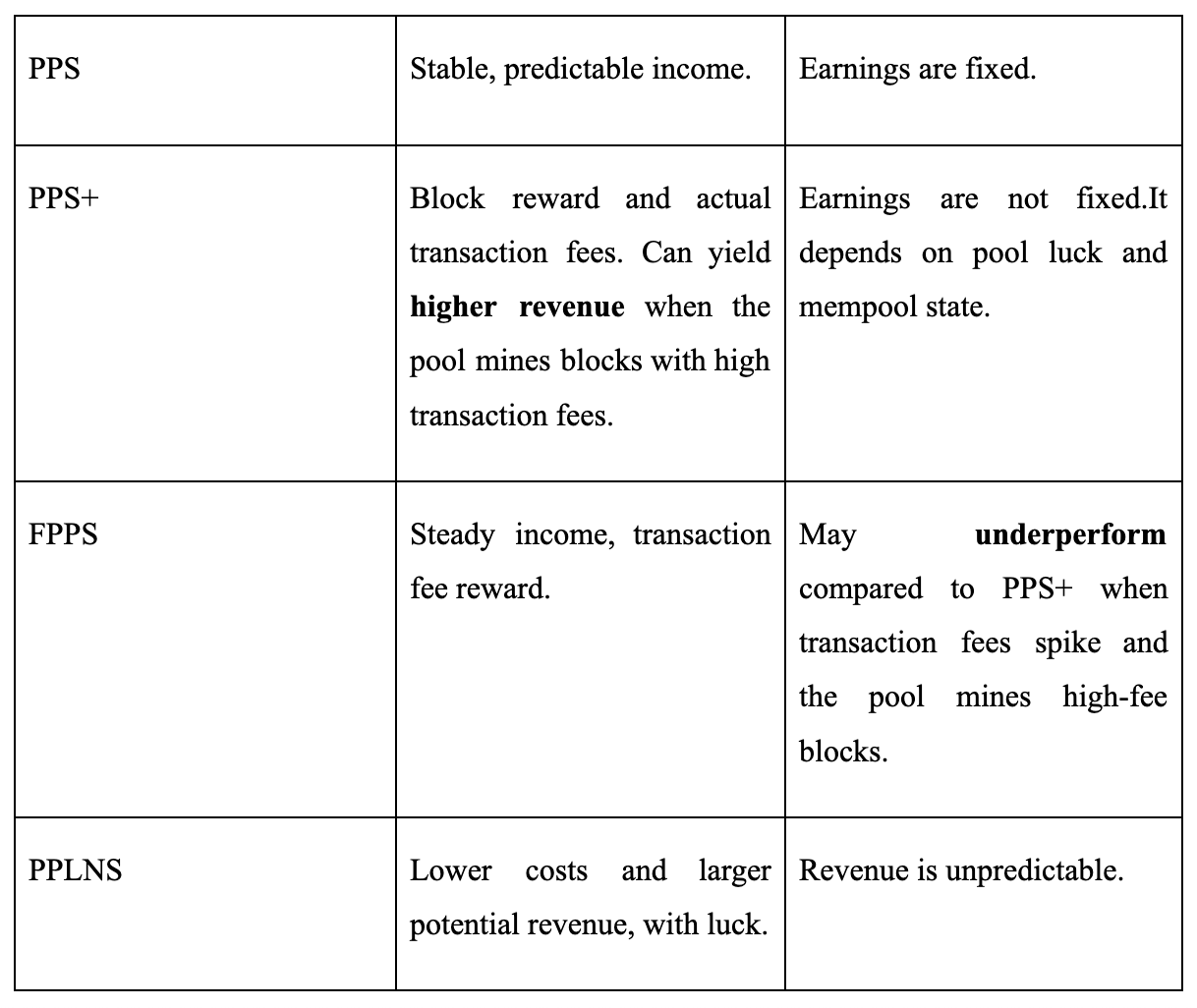
ViaBTC structures its financial framework using three distinct settlement choices, ledger processing mechanisms, and multi-token allocations that directly alter the net income profile of computing deployments. The standard PPS+ setup imposes a 4.0% combined levy split equally between baseline subsidies and network processing cuts, while PPLNS lowers the platform cut to 2.0% by linking rewards entirely to short-term block extraction rates, and large scale setups running independent setups can utilize a 1.0% SOLO option alongside free distribution channels.
| Payment Method | Base Reward Cut | Block Fee Cut | Variance Rate (2025) |
| PPS+ | 2.0% | 2.0% | < 0.5% |
| PPLNS | 2.0% | 2.0% | 12.4% |
| SOLO | 1.0% | 1.0% | > 85.0% |
The deployment of a specific allocation option alters how data center administrators forecast capital allocations for upcoming quarters. Running a 50-Petahash hardware cluster under the standard PPS+ setup provides mathematical certainty by paying out base block earnings regardless of whether the platform finds a block on a given day. This allocation setup shifts the risk of statistical dry spells entirely onto the platform management infrastructure.
"Data center metrics from a 2025 operational audit showed that small platforms without baseline guarantees caused a 14% drop in short-term liquidity for mid-sized farms."
Maintaining short-term liquidity helps operations cover fixed utility commitments that require monthly settlement in local fiat currencies. Operators who can handle higher risk can select the PPLNS track, which reduces the platform cut to a flat 2.0% and links payouts to actual block discovery. This setup relies entirely on the long-term hashrate contribution window, matching the needs of setups with over 500 units.
-
PPS+ Track: Best for facilities needing fixed income to clear monthly utility bills.
-
PPLNS Track: Best for long-term deployments with enough hardware to smooth out weekly block luck.
-
SOLO Track: Best for mega-farms holding at least 1.0% of the entire network hashrate.
Farms holding large blocks of network power use the 1.0% SOLO setup to bypass group sharing mechanics entirely. This setup rewards the individual account with the full 3.125 block subsidy minus the platform cut only when their specific hardware solves a block. This calculation method requires a massive sample size of active machines to overcome the statistical hurdles of the current network difficulty.
"A testing group of 8,500 new generation mining rigs running in Iceland demonstrated that solo operations face up to a 90-day gap between block solutions."
Extended production gaps can strain treasury reserves if an operation lacks secondary capital backstops. To offset this, the platform includes automated merged mining allocations that credit accounts with secondary tokens without raising the power draw of the hash boards. These secondary allocations distribute fixed ratios of auxiliary tokens for every unit of work submitted to the ledger.
-
Namecoin (NMC): Allocated at a 1:1 ratio based on valid work data.
-
Syscoin (SYS): Distributed automatically to separate storage balances.
-
Elastos (ELA): Credited at a fractional rate of 0.5 tokens per share unit.
Accumulating secondary tokens provides a minor buffer that covers regular firmware updates and field maintenance expenses. Miners can track these multi-token balances live through the BTC mining pool data interface, which updates individual worker performance metrics every 600 seconds. This data pipeline allows remote managers to check if their hash speed matches their paid rewards.
Checking these numbers against local hardware logs helps teams spot network lag before it causes rejected shares. Validated balances are deposited into user accounts through an hourly distribution schedule that replaces the traditional 24-hour waiting lockup. This setup gives users access to their capital 24 times faster than standard platforms.
| Operational Metric | Hourly Distribution Track | Daily Distribution Track |
| Minimum Settlement Limit | 0.001 BTC | 0.01 BTC |
| Auditing Verification Windows | 24 per day | 1 per day |
| Asset Price Risk Exposure | 60 minutes | 1440 minutes |
Frequent access to settled assets protects capital from intraday price shifts in the broader digital asset marketplace. These cleared balances can be moved through internal network channels to companion exchange platforms without triggering on-chain transfer costs. This internal routing avoids the standard network processing fees that normally lower daily margins.
"Removing on-chain transfer fees saved an international mining group an average of $620 per week during a high-traffic period in early 2026."
Saving on transaction costs allows regional managers to keep their overall production expenses closer to their target targets. This cost control works alongside a built-in transaction acceleration network that uses the pool’s total hashing presence to prioritize slow block confirmations. This process speeds up capital movement when the global mempool is backed up.
"Testing logs show that priority acceleration requests processed through the group's blocks clear pending transfers within 45 minutes."
Faster confirmation times help companies that need to convert digital assets quickly to fund ongoing on-site engineering adjustments. By combining adjustable settlement rates, multi-token rewards, and free internal transfers, the platform provides a financial setup tailored to the cost challenges facing modern industrial data centers.
Carry something made to outlast the season.
Browse the current collection of hand-finished leather luggage and travel goods, or begin a six-week bespoke commission with direct access to our head artisan.
Shop the Collection