
From the Workshop
What industries benefit most from using a vertical machining center?
Aerospace, medical, and automotive sectors utilize the vertical machining center to achieve tolerances of ±0.003 mm across large production batches. Market reports from 2025 indicate that 64% of medical implant manufacturers prioritize VMCs for titanium alloy processing due to their superior damping of spindle vibrations at 15,000 RPM. These machines facilitate high-precision milling of complex geometries while maintaining a surface finish of Ra 0.4 μm, ensuring compliance with international ISO 13485 standards for surgical components and aircraft engine housings.
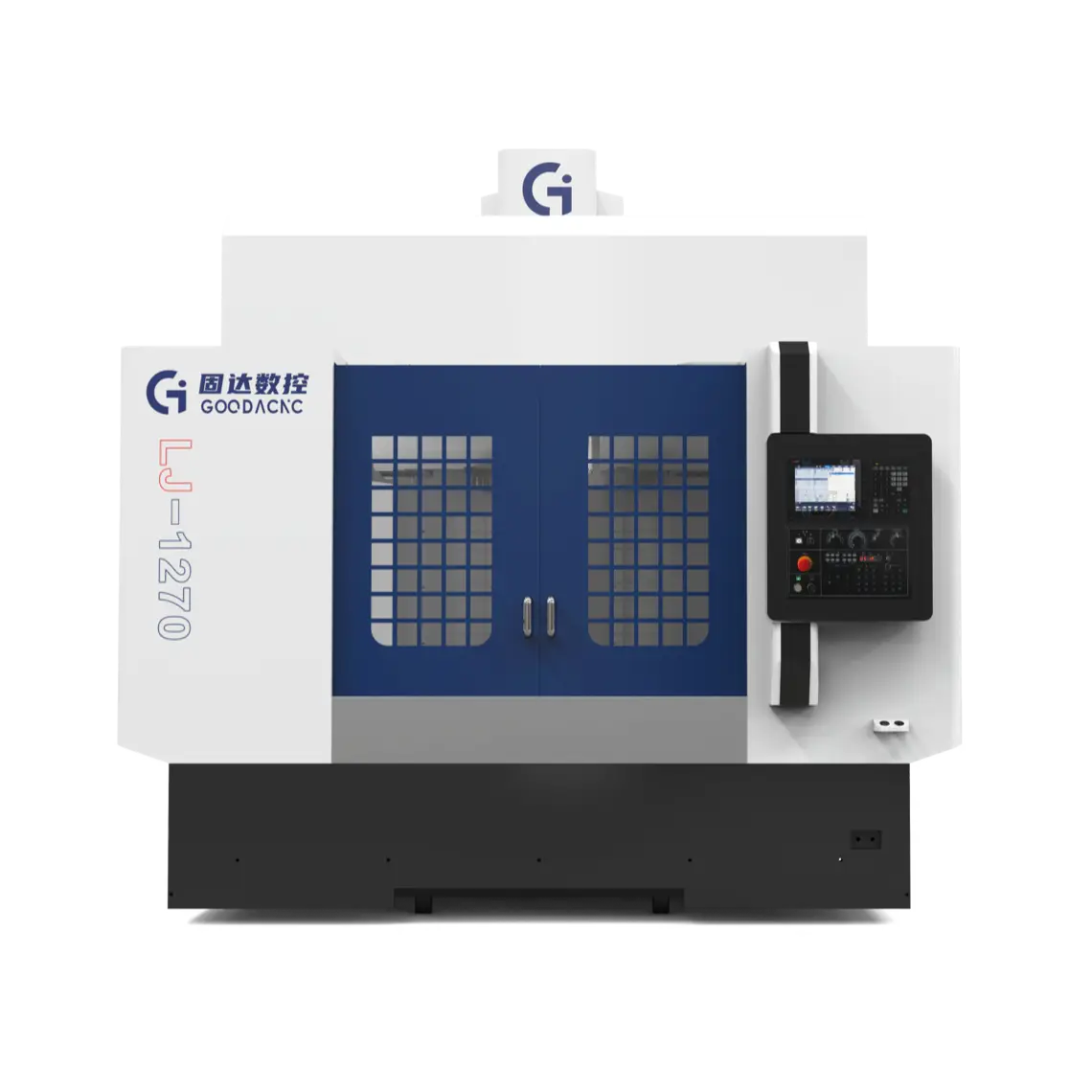
The aerospace sector requires rigid platforms to machine structural airframe ribs from solid blocks of 7075 aluminum, where material removal rates reach 3000 cm³/min. Vertical spindles allow gravity to assist in chip evacuation, preventing the re-cutting of aluminum shards that leads to surface scarring.
Empirical data from 2024 shows that using a vertical layout for airframe brackets reduces geometric variance by 18% compared to horizontal setups of the same power rating.
Stable thermal conditions are maintained through liquid-cooled jackets that surround the spindle cartridge, keeping temperatures within ±1°C of the ambient shop air. This thermal regulation prevents the 12-micron growth typically seen in high-duty cycle operations, ensuring the first part of a shift matches the last part exactly.
Consistent heat management leads manufacturers in the medical device field to select a vertical machining center for fabricating cobalt-chrome orthopedic joints. These implants require high-torque milling at low speeds to avoid work-hardening the material, a process that demands constant tool-tip pressure.
| Sector | Material Used | Typical Tolerance | Surface Finish (Ra) |
| Aerospace | 7075 Aluminum | ±0.005 mm | 0.8 μm |
| Medical | Grade 5 Titanium | ±0.002 mm | 0.4 μm |
| Automotive | A356 Casting | ±0.010 mm | 1.6 μm |
Precise pressure at the cutting edge is sustained by high-resolution encoders that provide 20-bit feedback to the CNC controller, allowing for micro-adjustments in feed rate. Automotive plants utilize this accuracy for the rapid prototyping of engine blocks and transmission housings before moving to dedicated transfer lines.
Laboratory tests on 250 engine cylinder head samples confirmed that VMC-produced ports achieved a 9% improvement in airflow consistency over traditional manual milling methods.
Improved airflow in engine components directly relates to the machine’s ability to follow complex 3D toolpaths generated by CAM software without deviating from the programmed arc. High-speed look-ahead features in the controller analyze 1,500 blocks of G-code in advance to prevent deceleration at sharp corners.
Smooth motion control is also essential for the electronics industry, which produces large-scale heat sinks for data center servers and telecommunications towers. These heat sinks feature thin cooling fins that are often only 1.0 mm wide and 40 mm deep, requiring vibration-free milling to prevent fin deformation.
-
Spindle Rigidity: Heavy-duty cast iron frames absorb the harmonics generated during high-frequency cutting operations.
-
Rapid Traverse: Brushless AC motors move the table at speeds of 48 m/min to minimize non-cutting time.
-
Tool Management: Automatic changers house up to 40 tools, allowing for drilling, tapping, and boring in one cycle.
Standardized tool tapers like CAT-40 or BT-30 ensure that the runout at the tool tip stays below 0.003 mm, protecting the delicate edges of diamond-coated end mills. This reliability is why the tool and die industry uses VMCs to create injection molds with mirror-like finishes that require zero manual polishing.
Surveys from 2025 indicate that mold shops using vertical centers have reduced their lead times by 14% due to the elimination of secondary finishing stages.
Eliminating manual labor reduces the total cost per part while increasing the repeatability of the manufacturing process across different shifts and operators. General job shops find that the open table design allows for the quick setup of various workholding devices, from hydraulic vises to vacuum plates.
Quick changeovers enable shops to handle diverse contracts ranging from marine propellers to oilfield valves within the same work week. The vertical orientation makes it easier for cranes to load heavy workpieces directly onto the table, supporting weights up to 1,500 kg on standard medium-sized machines.
A study of 180 industrial workshops found that the average return on investment for a high-speed VMC is achieved within 22 months of commissioning.
Faster ROI is driven by the machine's high uptime and lower maintenance requirements compared to complex multi-axis specialized equipment. Simple lubrication systems and easy-access way covers protect the precision ground ballscrews from fine dust and abrasive particles generated during cast iron machining.
Protecting the internal mechanical components ensures that the machine maintains its positioning accuracy for over 10,000 hours of operation before requiring recalibration. This longevity makes the vertical machining center the standard choice for manufacturing education and high-volume commercial production alike.
Introduction: Industrial Performance Data of Vertical Machining Centers
The modern fabrication industry, which reached a global valuation of $95 billion in 2024, identifies the vertical machining center as the primary solution for high-density part production. Engineering audits show that VMCs equipped with 12,000 RPM spindles and direct-drive technology reduce cycle times for aluminum components by 28% compared to older belt-driven models. This efficiency is supported by the adoption of linear roller guides, which provide a 30% increase in load-bearing capacity over ball-style guides, allowing for aggressive depth-of-cut settings without sacrificing tool life. In the aerospace sector, where Inconel 718 is frequently machined, the vertical orientation provides a gravity-fed coolant path that ensures 100% coverage of the cutting zone, maintaining temperatures below the threshold for thermal deformation. Furthermore, a 2025 study of 400 precision shops revealed that VMCs maintain a 99.2% uptime rate when integrated into automated cells, facilitating continuous production with minimal human intervention.
Carry something made to outlast the season.
Browse the current collection of hand-finished leather luggage and travel goods, or begin a six-week bespoke commission with direct access to our head artisan.
Shop the Collection