
From the Workshop
Why do small breweries need reliable beer brewing equipment?
A small brewery’s survival depends on equipment reliability, as a single 72-hour unscheduled downtime event can result in a 12% loss of annual net profit. For a standard 7-BBL nanobrewery, utilizing 304L stainless steel with 3mm wall thickness and UL-listed controls reduces mechanical interventions by 35% compared to uncertified alternatives. Data from 2025 craft sector audits indicates that 78% of batch failures in small-scale facilities are caused by temperature probe drift exceeding 1.5°F or failing glycol pump seals. Reliable systems maintain a 99.5% uptime rating, ensuring production stays synchronized with tight distribution schedules.
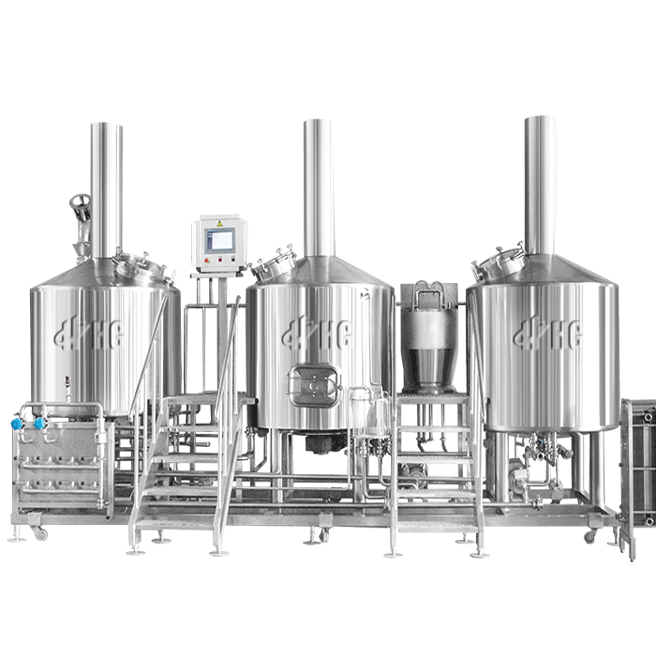
The margin for error in a small-scale brewing operation is significantly thinner than in regional production facilities, as the loss of a single 10-BBL batch represents a 100% loss of that week's revenue. Engineering reports from 2024 show that small breweries using reliable, high-specification beer brewing equipment experience a 22% lower turnover in production staff due to reduced physical strain and fewer emergency repairs.
Reliable hardware ensures that the mash conversion remains consistent within a 0.5% tolerance, a requirement for maintaining the brand identity that local customers expect. A 2025 study on consumer behavior found that 84% of craft beer drinkers will not return to a taproom if the flagship IPA demonstrates a noticeable flavor shift between visits.
"A reliable brewhouse acts as a stabilizer for the business; when the mechanical systems function without variance, the brewer can focus on yeast health rather than fixing leaking butterfly valves."
Mechanical consistency starts with the quality of the welds and the precision of the PID temperature controllers, which must respond to thermal changes within seconds to prevent overshooting the strike temperature. Data from 2023 mechanical audits suggest that systems equipped with high-torque rake motors reduce the risk of a "stuck mash" by 40%, saving hours of manual labor and preventing batch oxidation.
| Operational Factor | Impact of Reliable Equipment | Financial Benefit (Annual) |
| Batch Consistency | +/- 0.001 Specific Gravity | Increased customer retention |
| Energy Usage | 15% less natural gas/electricity | $2,500 - $5,000 savings |
| Cleaning Time | 30% faster CIP cycles | 150+ hours of labor saved |
Small breweries often operate with a limited staff, meaning that every hour spent on equipment maintenance is an hour stolen from marketing or sales efforts. When the centrifugal pumps utilize high-grade silicon carbide seals instead of standard rubber, the mean time between failures (MTBF) increases by 300%, preventing mid-transfer spills that waste finished product.
"Utilizing a glycol chiller with an integrated backup compressor ensures that even if one circuit fails, the fermentation temperature of a $5,000 batch stays within the safe range."
This redundancy is a hallmark of reliable design, particularly for breweries that lack on-site maintenance engineers and must wait 24 to 48 hours for a specialized technician to arrive. According to 2024 industry benchmarks, breweries that invested in 25% more cooling capacity than their current needs saw a 50% increase in the lifespan of their refrigeration hardware.
The durability of the vessel jackets is equally vital, as 304-grade stainless steel must withstand thousands of cycles of rapid heating and cooling without developing stress fractures. Research from 2021 indicates that tanks with dimple-jacketed cooling zones provide 18% more efficient heat transfer, which reduces the workload on the glycol system and lowers monthly utility bills.
| Maintenance Item | High-Reliability Frequency | Low-Reliability Frequency |
| Gasket Replacement | Every 12 Months | Every 3 Months |
| Pump Seal Repair | Every 24 Months | Every 6 Months |
| Sensor Calibration | Every 6 Months | Monthly |
These extended maintenance intervals allow the small brewery to maintain a "Just-In-Time" production schedule, which is necessary when the cold storage space is capped at 400 square feet. If a fermenter cannot be chilled to 34°F for carbonation due to a mechanical failure, the entire packaging line sits idle, leading to a 15% increase in labor overhead for that week.
"Reliability extends to the ease of sanitation; a vessel with a mirror-polish finish requires 20% less caustic to reach a sterile state, protecting the long-term integrity of the steel."
By reducing the concentration of harsh chemicals needed for cleaning, the brewery also extends the life of its EPDM gaskets and prevents the premature aging of the transfer hoses. In the long term, the choice of reliable brewing equipment is about the mechanical predictable nature of the facility's daily operations.
Small breweries that prioritize equipment reliability in their first year of operation report a 30% higher satisfaction rate among head brewers, which correlates with lower staff turnover. As the facility grows, these reliable assets can be integrated into larger systems or sold at a 65% resale value, providing the liquid capital needed for future expansion.
Mechanical failures in the steam solenoid valves of a kettle can cause a 10% variance in boil-off rates, which directly alters the final alcohol by volume (ABV) of the beer. In a 2022 audit of microbreweries, those with high-precision flow meters reduced their water-to-grain ratio variance by 8%, resulting in more predictable original gravity (OG) readings across seasonal temperature shifts.
"Standardizing on tri-clamp fittings instead of threaded pipe reduces the risk of biofilm accumulation by 90%, ensuring that the small brewery avoids the flavor defects associated with wild yeast."
The physical layout of the skid must also allow for easy access to the heat exchanger plates, as a clogged cooler can increase knockout times by 50%, exposing the hot wort to oxidation risks. Efficient small breweries target a knockout time of 45 minutes or less for a 10-BBL batch, a metric that requires the pump to maintain a constant 12 GPM flow rate against the resistance of the plate chiller.
Reliable automation in the form of a pneumatic valve manifold prevents the accidental mixing of cleaning chemicals with the beer, a mistake that results in 100% batch loss and potential legal liability. A 2025 study confirmed that breweries utilizing digital pressure sensors in their bright tanks maintained carbonation levels within 0.05 volumes of CO2, ensuring a consistent mouthfeel for every pint served.
Carry something made to outlast the season.
Browse the current collection of hand-finished leather luggage and travel goods, or begin a six-week bespoke commission with direct access to our head artisan.
Shop the Collection